Home
 

HISTORY


- St Peters
- Architecture
- People

Haseley of the past
- Pre-Norman
- Norman 1066 - 1150
- Middle Ages 1150 - 1485
- Tudor/Stuart Period - 1485 - 1714
Recent times 1700 - 1960


Georgiana Long's recollections
Retha Mancil's comments


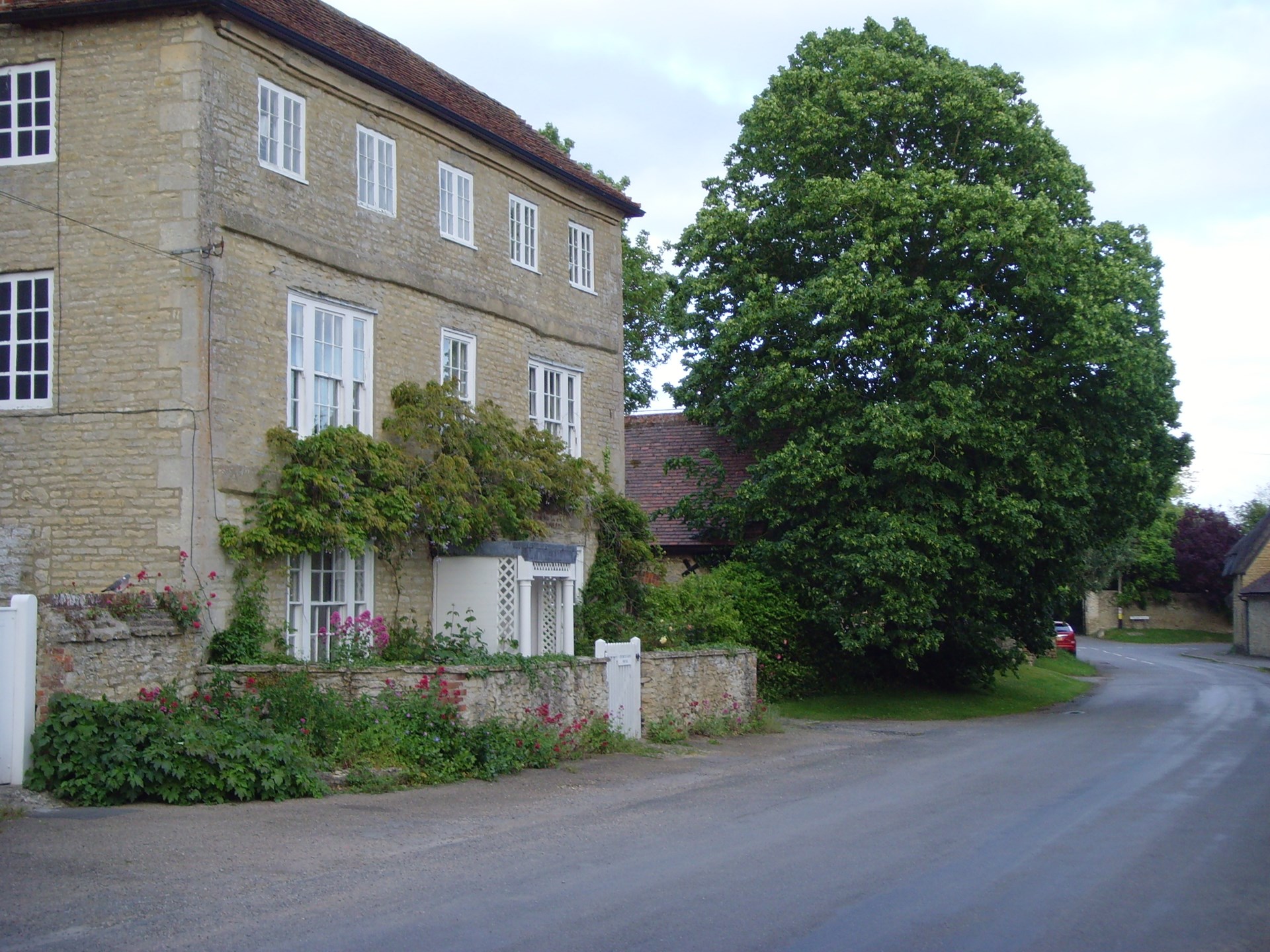
haseley street small.jpg


From Retha Mancil, Alabama -

My ancestor Sir William Barentine, Knight (spelling varies Barentyne, Barrington, Barentine) is believed to have left Little Haseley to his daughter Mary who married Anthony Huddleston, Esquire.  She is suppose to be buried at Haseley Church.  Died May 15, 1581. Anthony Huddleston was the High Sheriff under Queen Elizabeth I.  
Also there were many Barrentines who were High Sheriffs of Oxfordshire from 1307-1509.  
Drogo Barentyne, Thomas Barentyne,
John Barentyne are listed among the High Sheriffs.
Drew Barentyne inherited part of Little Haseley and then supposedly passed it on to Sir William.


haseley cottage.jpg


Lady_Mary_Long1.jpg

                 Lady Mary Long


William_Long1.jpg

                    William Long

Home

HASELEY OF THE PAST

Pre-Norman

The name is thought to derive from Hazel Ley -  meaning a clearing in a Hazel wood. For many centuries woods stretched from the main London - Oxford road to beyond Standhill and there appears to be no mention of a road to the village from that until after the Norman Conquest, though there is mention of one, past the Foundry through to Cuddesdon.

But as Roman coins have been dug up in the churchyard (two being in the possession of Mr Harry Payne) it is thought there must have been a settlement here very early, and there is evidence in a document now in the Bodleian Library that by 800 A.D. there was a church here, dedicated to St. Peter, as it still is. Part of the font is also thought to be Saxon.


church1.jpgBy the time of Edward the Confessor this area, known as Hazeley, belonged to the Queen.


Norman Period 1066 - 1150

Hazeley is mentioned in the Domesday Book 1087, as having 20 - 30 households, 60 acres meadow land, 150 acres woodland and 2000 acres of farmland. It than belonged to Milo Crispin, who held it as a reward for his services to William the Conqueror.

Milo Crispin built a wooden manor house very like a barn, where the Manor farm milking sheds are now. In 1105 he gave the tithes of his land to the Abbey of Bec in Normandy, and dues were paid annually to that abbey for centuries.


Middle Ages 1150 -1485

The next family mentioned in records as owning Haseley was the Basset family, one of whom appeared at Runnymead on the side of King John against the barons at the signing of Magna Carta, 1215. As a reward he was made Governor of Oxford Castle and Chief Justice of England, to the anger of the barons. Tiles, ornamented with a double-headed spread eagle (badge of the Roman Emperors) were made for this family and can be seen on the South Wall of the church near the font. It is thought that the stone coffins along the wall of the south aisle were also made for the Basset family.

Evidently Haseley was of some importance by the time of John, for he held his court, hunted in the woods, and dispensed justice here on at least one recorded occasion, and in 1228 Henry III granted permission for a Monday market to be held here. and later for an annual fair lasting three days to be held the day after St. Peter's day (29th June). Iron, salt and woollen cloth were the chief articles sold, and there was always a collection for St. Peter's Pence, which went to St Peter's church in Rome.

The chancel of the church was built in Henry III's reign (1216??1272) when the Manor belonged to Roger le Bigod, Earl of Norfolk and Marshal of England. In 1332 as a result of a quarrel with Edward III, v the lands were taken from Roger's family and bestowed upon William de Bohn, Earl of Hereford and Northampton. He commanded three divisions at the Battle of Crecy, 1346.

By 1415, the time of the battle of Agincourt, Haseley had given its name to a family, for a George Haseley is mentioned in records in that battle.

By about 1440 Little Haseley and Lachford (lache = sluggish stream) were owned by a family called Pypard, who, in return for their lands, had to follow the King 80 days in the year with two men in full armour.


Haseley itself and the patronage of the Rectory were given to the College of Windsor (it had belonged to Lincoln) and up to Queen Victoria's time the Dean of Windsor was also Rector of Haseley, though he usually put in a priest and let out the Glebe land belonging to the Church on lease.

William Lenthall of Herefordshire married one of the Pypards and came into possession of Latchford, where there was a chapel and small monastery built by one of the priests of Haseley. There was constant trouble with the Abbot of Thame during the 15th Century because the people of Latchford paid dues to Haseley instead of to him and at one time he sent men to burn down the chapel. They took the silver candlesticks and crucifix and burnt the charter. The monks of Latchford appealed to the King for redress; he said they could claim damages if they could produce the charter, but since it had been burnt, this could not be done, so the chapel was never rebuilt.

One of the Lenthall family left money for candles for the Church and for fourteen poor men and sixteen poor women to have a feast in the churchyard on certain occasions. The food was to consist of white bread, roast meat, beer, apples and pasties. Money was also left for the replacement of rushes on the floor of the Church.

A brass in the South aisle, known as the Lenthall aisle, commemorates one of this family.

At Little Haseley in the 15th Century the Barrentyne family had what was described as a 'fair mansion and marvellous fair walks with orchards, pools and topiary' (clipped yew hedges in the form of birds or cutting in the form of chess men as one can see now at the Court is mentioned about 1580). The stone effigy by the font may be of one of this family, though one authority claims it as that of William de Mandeville, Earl of Essex, who died about 1220. The gloves and tilting helmet in the North aisle certainly belonged to one of the Barrentyne family and the altar tomb at the East end of the North aisle is theirs.

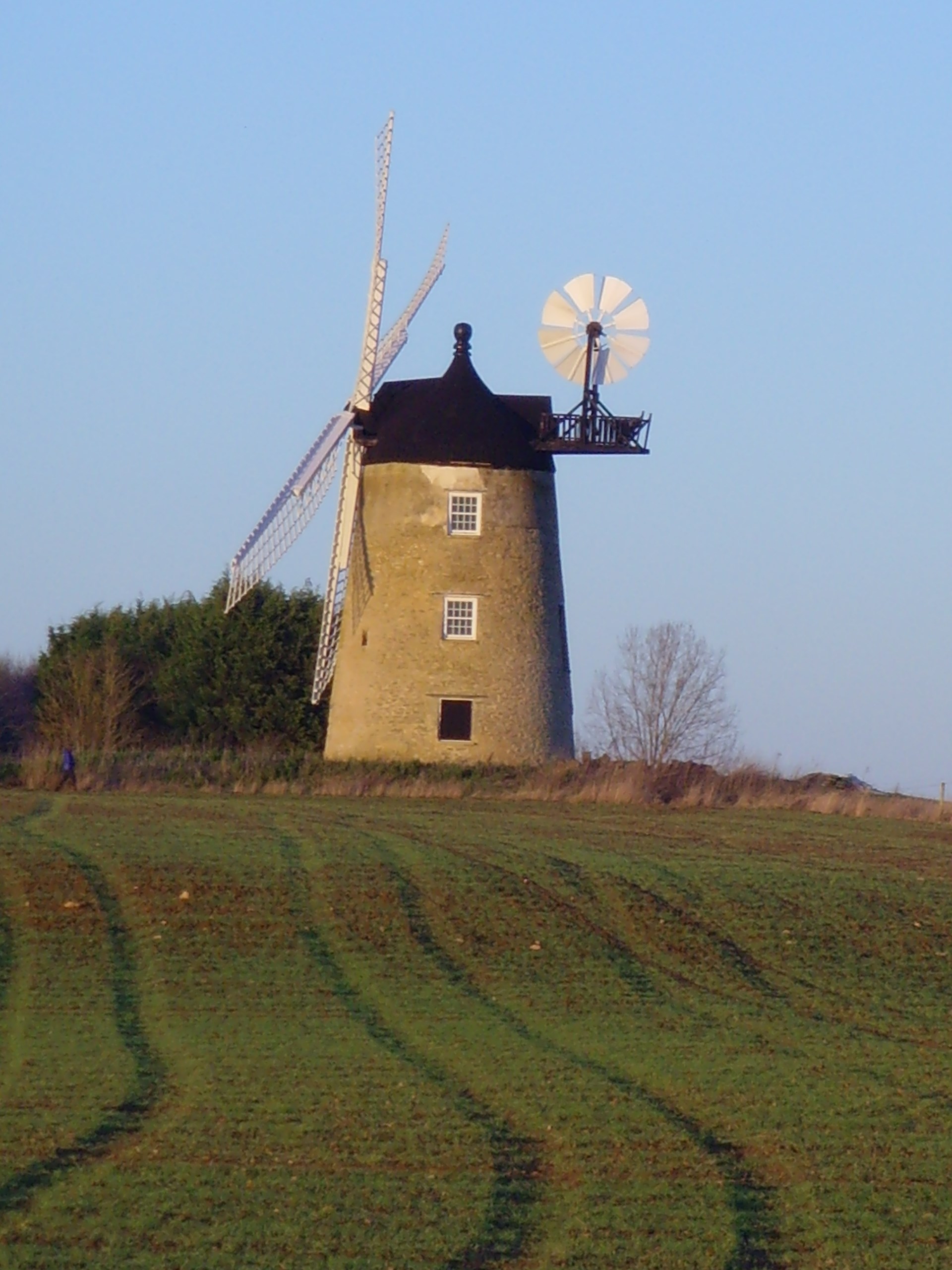
The Barrentynes had about 50 people working on their land, of four kinds: Freemen, who paid rent for their land in money or services e.g: one Maltida Tyrell had to cart hay and wood for the lord of the manor six days in the year and was entitled to meals in the house on those days. Others had to do a week's ploughing on the lord's land with their own oxen, or to give geese, capons, honey etc., at certain times: villeins, cottars or cottagers, and serfs, were bound to the land and had to work for the lord when he required, e.g. Walter of the Beard, villein of Haseley, held a cottage and ten acres, but had to help plough, cart hay and do threshing on the estate 'at his lord's will'. Villeins had strips in various places, some up by the windmill, others in the Grove or along Back Lane, others in Little Haseley. Lots were drawn each year to decide which strips were to go to which man. Pictures were drawn on the strips to show to whom they were allotted, as most people could not read. (Mr Leach had an old map showing the position of strips). Land raised into a sort of bank where the plough turned at the end of strips was known as the 'baulk'. This is still to be seen below the windmill and in the Grove. The hayfield of the parish was near Haseley Court ,and the common land, where people could graze animals was here also. A record of 1380 tells of a quarrel when a man in Warpsgrove brought his geese on to Haseley Common and in the evening drove off a number of geese belonging to Haseley folk, and in 1460 another record tells of someone. stealing part of the Rector's harvest. The thief had to give the Rector three times as much barley as he had stolen.

On the way to the 'Pigeons' were the Butts (now often called Bittsey Bottom) where all able-bodied men had to practise shooting with bow and arrow in case they were needed to fight, and every year the Sheriff of the County came to inspect their marksmanship.

By the 1400's the Parslers (Mrs Lovell and Mrs Payne were Parslers), The Allens, slaymakers and the Shrimptons were settled families in Haseley.

During the Middle Ages the Church, of course, played an important part in the life of the village. And Haseley church is remarkable in that it shows an almost complete succession of architectural styles from the 12th to the 16th Century.

The South doorway is considered to belong to the 11th Century, the West doorway is a fine specimen of the Early English period, date about 1200, with three concentric arches, the outermost one decorated with dog tooth ornament. The tower dates from about 1300: the four main arches of the nave are Norman in character, but are thought to date also from about 1200, and the arches between the naive and chancel from slightly later.

The chancel windows are 14th century and the masonry of the East Window, damaged recently by lightning, is considered to be the finest in Oxfordshire.

Notice, too, the long slits in the arches between the nave and chancel, to allow the congregation sitting on stone seats along the side of the nave or in the chantries, to see what was going on at the High Altar. N.B. Most of the congregation stood. I understand the transparent sort of window is made of horn.

And to finish with the Middle Ages - a ghost story. One of the rectors of the 14th Century is said to have murdered another clergyman during a drunken quarrel and to have buried him under the floor of the Rectory. The ghost of the murdered man is still supposed to haunt the surroundings of the Old Rectory.

Tudor and Stuart Period 1485 - 1714

During the Tudor period sheep farming became the main occupation here. The number of inns increased (I'm told there were fourteen here at one time) each with its paddock where sheep could be enclosed while their owner put up for the night, when he was on his way to or from the big sheep fairs.

Landlords now began to enclose fields in the interests of better and more profitable farming. Many.villeins were turned out of their holdings and strips farmed by them for centuries past were taken away. This was the main reason for the decline of Latchford and for the increase in the number of beggars and of crime in Tudor times. (Main road - footpads, highwaymen - gibbet 3 Pigeons).

Between 1500 and 1600 Haseley became celebrated for its gardens. That at the Court was already well known, now the Manor garden became famous for its quince trees and for an enormous vine, from whose grapes the owner made his own wine. At Rycote there was a great park with a maze and herds of deer. Here lived Lord Williams, rich London merchant and founder of the Boy's Grammar School at Thame. After the Reformation he formed a syndicate to buy up monastic lands cheaply and resell at a great profit for farming. During Mary's reign he pretended to become a Catholic and Elizabeth was put in his charge under virtual house arrest, because Mary trusted him. He treated Elizabeth so well that when she became queen she conferred a title on him and made him many gifts.

At Little Haseley, the Barrentynes, goldsmiths of London, also bought up much monastic land when Henry VIII turned out the monks at the Reformation. I have already mentioned their family tomb and the tilting helmet and gloves in the North aisle. One of the daughters, who married a Huddleston, has a fine brass to her memory on the floor of the nave near the pulpit under the strip of carpet. She died in 1581 and was mother of five daughters, who are shown below her on the brass.

A second rectory was built on the site of a previous one. The Tudor kitchen of this occupying two floors of the present house, most of which is of the 19th Century, still remains. The timbered hall, with its long scrubbed tables, huge fireplace, and great copper pans, is well worth seeing. Rumour that underground passage from it led to crypt of church.

Famous rectors of this period were:
John Leland, historian and chaplain to Henry VIII

John Harding, who helped in the translation of the Bible, Authorised Version commanded by James I and Christopher Wren, father of the famous architect.

The Huddlestones of the Manor were ardent supporters of Charles I in the Civil War and at the time of the Restoration of Charles II were said to hold great orgies there. According to stories, the wall separating the garden from the path leading to the Church, was put up to prevent parishioners from being shocked be seeing what was going on at the Manor when they were on their way to and from church. Remember that at this time every one had to attend church or pay a heavy fine.

The Manor was later held by Sir William Cutler, surgeon to the King, and afterwards sold to the Blackhalls, alderman and merchants from London. They kept six fine carriages, horses and a good stable, as well as being good farmers, experimenting with new breeds of cattle and new types of seed.

Up to about 1600, children had been taught in the church or churchyard; now a school, aiming to teach boys Grammar, English and Latin Literature, was started, the building being where the school coal sheds are now. The schoolmaster earned £15 a year, plus £10 for weighing out coal for the poor of the parish. A famous schoolmaster was Thomas Delafield, historian, who later became vicar of Great Milton.

John Hampden, famous in the Civil War, was born at Latchford, and after being badly wounded at the Battle of Chalgrove, rode on horse back through Little Haseley (where he is said to have rested in what is now known as Hampden's Cottage) then rode on through Latchford to Thame, where he died later, and where there is a memorial stone outside Austin's shop.

Luke Taylor, who made his fortune in trade and whose brass rubbing is on the floor of the South aisle of the Church, left by will a 'considerable estate to ye poor of this parish'. According to stories, he was on the side of the King in the Civil War, had to flee from his home at Latchford because of threats from Parliament supporters and was murdered by his nephews in the Grove in 1647. They hoped to inherit his money but he had left much of it down a well and in his will bequeathed it to the poor of Haseley. What he left was added later to the Blackhall Charity, which will be mentioned shortly.

The Church in Tudor and Stuart Times


In Tudor times a flat ceiling was put in the chancel, hiding most of the upper windows. This was painted blue and decorated with paintings of clouds, sun, moon and stars to represent the furniture of the sky.

In the North aisle there is some perpendicular work of the Tudor period and in the South aisle some of the Stuart period. The pulpit and pews are of Stuart period as well as two chairs by the altars, one having the date 1603 on it.

At  the Restoration there were two rectors living here, one of whom had retired in Cromwell's time because of disagreements over the services. In Charles II's reign he reappeared and tried to turn out the rector who had replaced him. At one service both rectors tried to preach at the same
 time; the congregation took sides and there was a great furore, hats and other objects being hurled about and fighting going on.

The families of Cooper (stonemason), Parncott (now Pancott) sextons, Cornish and Belson date from this period.

Haseley 1700 - 1960


By the middle of the 1700's Latchford had decreased much in size and importance, but a considerable amount of building took place in Haseley. Among those built were Mrs Cooley's house, Highway Cottage, Long Row, (the whole row cost £173 to build), cottages down by the Green, Walcroft's Cooke's and Gowings shop,  Sundial House, Church Farm (note windows blocked up when a window tax was imposed to help pay for the Napoleonic wars), the Crown lnn, now a private house, the Windmill and the middle part of Haseley Court. This was built on the site of the 14th Century Manor of the Barrentynes, by the Townesend family of mason-architects from Oxford, and paving for the hall was supplied by John Cooper; mason of Haseley.(from the quarry, behind the Old School House).

Records show that in the election of 1745, when only freeholders could vote, Haseley had six voters, Little Haseley three, Latchford four. Polling lasted three days, and there was a great deal of free beer drunk and many a free fight.

By 1800 there were 180 different  coats of arms displayed in the Church, but during the 19th Century the Church fell into decay; windows became broken and not repaired, masonry became damaged, and the roof leaked badly. Finally an appeal was launched to put it in order. Then a gallery was constructed between the nave and chancel and a brass band played there for services. One of the instruments is still on view by the font. None of the coats of arms was replaced when repairs were done, but the Muirhead family, who lived at the Court, traced their ancestry back to Roger le Bigod and had their coat of arms (with Norman ships and shells) placed in a window of the South aisle. The Muirheads were liberal benefactors to the Church and took their responsibilities as squires of the village very seriously.

The present Manor, built largely in the 1700's, was described as 'offering the amenities of spacious isolation desired by people of sensibility'.

The Blackhalls who lived there at that time, and whose typically 18th Century monuments can be seen in the vestry, were great benefactors to Haseley. George Blackhall started the Haseley Charity, now called the Taylor and Blackhall charity, and left a considerable sum for the education of children. The school was enlarged; its entrance now faced Gowing's shop and the children entered through a farmyard. The present playground was a rickyard and the now infants' playground was the village Pound, with a pond in the middle. Sundial House, opposite the school, was the Curate's house. It is on record that once in the 18th Century people threw dead cats and rubbish into his dining room to show their dislike.

The Old Rectory was rebuilt in the 19th Century. When Canon Wooler lived here with his family, nineteen servants were kept.

The present Rectory was an undertakers, the Bakery was a jewellers, Highway Cottage a post office, Mrs Woods' house a police house, Mrs Gowings's a fish and chip shop, Mrs Greenway's a butchers shop. At Little Haseley, there was an off licence called the 'Sportsman Retreat', and at. Mrs Cook's on the corner of Little Haseley was a small school. A church service was held there on Sunday afternoon.

The village laundry was at the bottom of Church Hill. In 1885 a spark from the chimney set fire to the thatched roof. Flames driven by a high wind set fire to thatched roofs across the way, and six cottages were soon alight. Someone galloped on horseback to Thame to call the Fire Brigade, made up in those days of volunteers who had to be collected from their work. By the time the fire engine, horse-drawn of course, had arrived and got water from a quarter mile away, all the cottages had been burnt to the ground, and burning thatch from these had been carried by the wind beyond the Church to the Church farm, homestead which also caught fire. Altogether damage estimated at £1000 was done.

In the 19th Century a Carrier Service to Thame and Oxford was begun. This consisted of a covered van with two horses; benches ran along the sides of the van; straw lay on the floor and there were candles set in storm lanterns. Rugs were provided to cover the legs of passengers in cold weather. The carrier went to Oxford on Wednesdays and Saturdays at 9am reaching Oxford about midday, making several stops on the way to deliver and take on parcels etc. He started back at 4 pm reaching Haseley 8 - 9 pm. The cost was one shilling return. On Tuesday the carrier went to Thame. For this an open cart was used, with seats back to back along the middle. A large umbrella was provided for the passengers in wet weather.

The Report made in 1883 by Canon Ellison, the Rector, lists nineteen activities going on in the village then, including a Drum and Fife Band, a Night School, for which two pence a week was charged and a sum returned at the end of the winter for regular attendance, and a Lending Library.

In 1892 a Village Institute was opened for the use of the village every weekday evening in winter. When the school was rebuilt in 1902, this Institute became the infants' school and a Church Hall was constructed out of the Glebe Farm Barn opposite. Portraits of the benefactors, Colonel.and Mrs Muirhead still hang in the hall.

Most of the money in the Taylor and Blackhall charity was used up in the rebuilding of the school in 1902 and there is now only a small amount left to justify it being still called the Endowed School.

The Muirhead family, mentioned previously, lived at the Court until the Second World War. It was then occupied by various Army groups, including the US forces and Italian and German prisoners of war, during the war; considerably damaged during their occupation, and afterwards fell into decay. When it was almost .past saving, the Society for the preservation of Ancient Buildings introduced it to the notice of Mrs Lancaster, who bravely set to work to transform it into the beautiful place it is now.


warmemorial1.jpg

As to the occupants of the Manor after the Blackhalls, I am somewhat confused. It was a boys' boarding school at one period and there is a ghost story connected with it in the 19th Century. From the accounts, I gather that a lady who died or was killed on her wedding day, is said to appear at intervals, and people whose forbears have lived here, tell of a room prepared for the wedding banquet being shut up and left untouched for years. But to my mind, this story resembles rather obviously the one told in Dickens's 'Great Expectations'. Certainly, however, while I lived here, there were from time to time rumours of ghostly figures and strange noises in the Manor, and one woman, an authoress who had lived many years in the Far East and who was interested in occult matters, claimed to have seen and spoken to an apparition at her bedside more than once.

Mr Leach bought the Manor a year or so before the outbreak of the Second World War. During the war the main building was rented to an engineering firm evacuated from Maidstone and Mr Leach had the old stables converted into a house for his own use, dividing the Manor after the war, into three flats for letting.

Until some years after the end of the war, most property and land in the area was still owned by the Muirhead family, in the person of Mrs Thomas, but early in the 1950's the estate was sold. Many villagers bought their cottages and set to work to improve them. Then new council houses were built in Horse Close and later bungalows were built in Latchford Lane, bringing many changes and newcomers to this ancient village.

(Author's name unknown)

Georgiana Long's recollections -

These, provided by Juia Crane, her descendant, provide a fascinating insight into 19th century life, with references to Haseley Court. 

In the year 1836 my brother John went into the Army as a Colonel in the 10th Hussars. There was no examination in those days for officers, or at least very little, and they paid for their commissions. My brothers Walter and William went to Oxford, Walter to Oriel College and William to Baliol College. Mr Bantell went away, and the printing press put away as lumber.


The terrible outbreak of the influenza took place in 1836 and 1837 we were all very ill and left London earlier than usual for Preshaw. Numbers of people died and, and some went mad, the doctors did not know any cure for it. In the Autumn of 1836 we went to Hazeley Mr Troy came there and brought his wife. They were just lately married, he did not paint any pictures then, but brought some old oak carvings and curiosities with him. His sister Miss Troy came to be our Governess for about six months.


In February 1837 my mother travelled to the Hendre by coach to be with my sister Mrs Rolls at the birth of her son John Allan Rolls. I diligently took care of my father in her absence. On her return the stagecoach she was in was upset near Marlborough, she was inside and the men had much trouble in pulling her out of the window and hurt her arms, but no one was severely hurt. The passengers had to take refuge in a cottage till the coach was again ready, which caused much delay. I remember sitting up with my father, he much frightened wondering what was become of her. She arrived about 12 o’clock at night having posted I think from Salisbury.


In this year the King died. My brother Walter came of age on 26th June and there was a discussion about the general mourning, however all the numerous guests invited to the festivities agreed to leave off their mourning for that day, as they thought black would look so dismal. I remember a whole family of Sir Henry Tichbourne and daughter besides himself and Lady Tichbourne and Mr John Bennett, Sir Henry Rivers and family, Sandersons Powells of Foxlease, John Trenchard and Mary ? who are all dead and gone. They danced on the lawn as well as in the house, and made merry with the strong ale, which had been brewed at Preshaw on the birth of my brother. The festivities lasted 3 days and then I went away with my sister and Mr Rolls and the baby John of six months old. We posted to Amesbury and slept there going to see Stonehenge on the way. It was a baking (?)  hot day at the end of June, and we sat down amongst the stone, trying to get a shady place for the baby. Next day we posted to Courtfield, Mr Vaughan’s place near Ross where we staid (sic) as the building of new rooms at the Hendre was going on. We found the rest of the family there, the 3 little girls; The Dowager Mrs Rolls arrived the next day. I spent a very happy month. Sir Benjamin Hall of Llanover had built a fine house there, and invited all his friends to a grand fancy Ball as house warming, so we went to an Hotel at Abergavenny and dressed for the Ball John Rolls in a Greek Dress my sister a Swiss peasant and I as Anne Page. I had a yellow satin skirt embroidered with flowers a black velvet bodice with red satin sleeves point lace apron and black velvet peaked hat. The Dowager Mrs Rolls insisted on my wearing her diamonds as some fastened in my hat, and others in the front of my bodice. My dress was much admired. Sir Charles Morgan and Sir Benjamin Hall (afterwards Lord Llanover) said they hoped I should not be stolen on my way back to the hotel. It was my first ball, as I was only seventeen and I enjoyed it thoroughly.


In October we went to Hazeley from Courtfield, postering all the way in an open carriage. Mr Rolls enjoyed the pheasant shooting at Hazeley. We were astonished at hearing that my sister Lucy aged 15 was engaged to be married to William Barnes aged 20! My brother William had made the young gentleman’s acquaintance at Oxford, and they found they had unknowingly engaged the same tutor to coach them in the vacation. When my father heard of this he invited W Barnes to come and study with William and bring the tutor. William Long studied diligently being very anxious to take his degree, but William Barnes was more interested in lovemaking. The engagement was allowed, but they were to wait at least three years.


I accompanied my father and mother to dinner parties in the neighbourhood of Hazeley; The Henleys of Waterperry, Lord Macclesfield of Sherbourne Castle, Mr Ashurst of Waterstock, the Fanes of Wormsley, the Lowndes Stones of Brightwell, Lady Wenman of Thame Park and many other families. The distances were great 7,8 or 10 miles. The dormers were not like those of the present day, but more simple and homely; the host and hostess carving the duties themselves. The parties were very pleasant; we had music and round games of cards in the evening. As Hazeley was only ten miles from Oxford my brothers and their friends often came out for a few hours. My father restored the beautiful church in the village, which was in a state of decay from neglect and also put the house in good repair.


The year before this one, in 1886 my Uncle John Carnegie married Miss Stevenson; he was persuaded into the match by Mrs Long of Marwell who knew her and her father well. She was rich and had a house at Wimbledon, my Uncle had no home after his mother’s death and no profession. After their wedding they travelled to Scotland, and afterwards to Ireland when they persuaded my mother to go with them. She was glad as she had never been to Ireland She enjoyed the trip and they were away about a month in the summer.


1838 we were in London in the Spring, I think it was about this time that my Mother was much interested in Phrenology and Mr D (?) was all the fashion. People went to him to have their heads felt and he wrote down the character of each person. I saw a bust made of my mother, she was placed on the floor and a man plastered her face all over with plaster of Paris. She could not breathe and I was so frightened for fear she would be suffocated; then the man took a string and divided the plaster into 4 parts and took it off. The bust was afterwards at Preshaw in the passage for many years, and was found broken at the sale of house and affects in 1898.


I was not well, so was sent to Brighton, as Uncle John wished me to stay with them there. We went every year to Muchelney when the audit dinner took place and the farmers paid their rent. The ruins of Muchelney Abbey are very interesting. The church is very fine. My father put it in complete repair and my mother painted a picture in oils which is placed over the altar, A copy from Vandyke of the entombment of our Saviour. My mother copied some of the Romneys and gave one of her paintings to each of her children.


In 1839 my father let his house in London and moved the furniture, some to Hazeley Court and some to Preshaw. My brother Walter was married in the Spring of 1839, they went to Hazeley for their honeymoon, and then settled at Preshaw with us where they remained for eight years before they removed to Holt.


1840 my sister Lucy was married in Hazeley Church, we had to have the house full for the occasion; William Barnes’s Father and Mother and sister, all my brothers and sisters, Lord Northesk my uncle, and John Trenchard.

The wedding breakfast was in the large dining room, which originally was the old Roman Catholic Chapel. My father made a fine room of it with stained glass windows. All the neighbours were at the garden party in the afternoon.

In a few days after the wedding I went with The Rolls to the Hendre. We posted in an open phaeton; little Johny Rolls and his nurse were with us. We were two days on the road stopping at the Hopkinsons on the way.


Mrs Long of Marwell died in September 1840 and my father moved the books and pictures from there to Preshaw, placing the Romneys in the best bedroom and on the staircase. Noone was aware of their great value they had been in a large bedroom at Marwell with their faces to the wall for many years.

Mr William Long died in 1818 he was an amateur painter and lived in London before he came to Marwell. Romney was his friend, and gave him some of the pictures others he bought at a sale of Romney’s property after he died in 1802.


My aunt Lady Jane Lindsay Carnegie died in 1840 My mother did not now she was ill, but one day received a formal notice of her death according to the Scotching way of doing such things. She was so shocked that she was taken ill of liver complaint. I heard this from my father as I was away at the Hendre. I spent a very happy time at the Hendre and did not return home all the Spring of 1841, when Uncle Swynfen Carnegie wanted me. We went from Monmouth to Chepstow by coach and then in an open boat across New Passage. Another coach meets the boat on the other side; it was a pouring wet day and the sea very rough. The boat could not get to the coast, so all the passengers were landed onto a rock and the coach was driven onto the water to take us off. I got very wet, and felt very miserable. The coach went as far as Bristol and then we had the train to Bath. We went to Lady Jervis at Bath for the night and next day travelled to Preshaw we were many hours on the road.

My brother William was married the next week of our arrival to Miss Jolliffe, the wedding was at Corhampton Church. My father was ill this year 1841 everybody thought he was dying. The whole family assembled at Preshaw The Rolls posted all the way from the Hendre and arrived late at night and the William Longs also from Bath I went to Winchester one day to fetch Mr Clovers who came from London, thinking to see the last of his old friend, it was most affecting to see him in tears, we had always considered him quite devoid of sentiment, and cold and hard by nature. A Dr Budd came from London to see my dear father he looked at him, and stayed about half an hour for which he was paid £60!! About this time my brother John left the army, and engaged himself to Miss Stuart. The winter was very long and sad my father recovering very slowly and my dear mother knocked up by close attendance on him.


In the summer of 1842 we went to London for my brother John’s wedding. We posted to Farnborough and there got the train for Nine Elms; it was the first time we had ever travelled by the railroad and my dear mother was so terrified, that she kept on saying “Let me out, Let me out!”. John and his bride posted all the way to Marwell with four (?), they went to live at Marwell. In the Autumn we went as usual to Hazeley Court and the Rolls came and returned to the Hendre with them, and stayed there some months and also went at bath to my brother William. This was in 1843; in the winter we had many balls to go to from Preshaw. In the beginning of this year the theatricals at the Hendre first began I was there but did not act. We did not go to Hazeley my father and mother went alone for a little while. Mrs John Long had a fine little girl, but when it was 6 weeks old the nurse overlaid it, and it was dead in the morning. This was a sad grief to them, I staid with them at Marwell, and went to the funeral; it was buried at Owlesbury.


1844 we had several balls and dinner parties in the beginning of the year, and in June I accompanied my father and mother to Melford to visit my Aunt and General Thackaray; their place was called Aubrey. My Uncle Lord Northesk was lately married, 1843 and was living at Melford. He wanted to give Aunt Elizabeth a house to live in and General Thackaray took a great fancy to live at Yarmouth in a dilapidated house near the water, so we all went to see it and said it was a horrid place which so affronted the General that he never forgave us. They had a better house afterwards called The Cedars near Bagshot. From there we went to Pennington near Lymington to visit the Powells who had sold Foxlease, and taken Pennington House for a time. There we found Clara Powell full of the (?) of Pusey and arranging to go to Miss Sellon’s Home at Plymouth.


In August we went to Ryde and Cowes regattas and were away for a week, part of the time with Uncle John and Mrs Carnegie who had just bought Fair Oak so we went to see it. From Little Green where they were living Ellen was left alone for a week. Jane L Carnegie was with us in the month of September till the 24th when she went to stay with the John Longs at Marwell. On 25th September we went to Salisbury with my father, four hours stopped at Stockbridge to (?). The horses arrived at Mr Attwood at 5 o’clock, slept there and went on to Rood Ashton next day, resting the horses at Heytesbury. We walked about in Lord Heytesbury’s park we could not get a room in the inn to sit down. Arrived at Rood Ashton a little before 5, then sat down a party of 60 to dinner in a tent with bonnets on. Then went to dress for the Ball. It was on the occasion of young Walter Long’s coming of age, which was on the next day. Grand festivities farmers’ dinner and Ball in the evening, fireworks and all sorts of entertainments. The third day was for labourers their wives and children with games of all kinds; 200 labourers at dinner. We danced again in the evening. On Sunday all walked to church and in the evening played at spelling games. As we went to bed one of the Miss Longs and another girl got on the stairs and threw a jug of water down on those going up and then ran away, the water went on my Father’s head and we were afraid he would catch cold. Mrs Long was very angry with her daughter who was a school room girl and afterwards Mrs Penruddock.


This year 1844 was a wonderful gay and busy year, I think my dear mother enjoyed going about quite as much as any of us, and my father kept very well and was very cheerful. We went to Stanton on October 14 staid there 2 days and then went on to the Hendre for a visit of a fortnight till 1st November. Private theatricals for 3 nights, Jane and I had to act in the plays. The house was full of company and we were very merry. On 1st November we travelled to Bath and staid three weeks with the William Longs. My father drank the water in the Pump Rooms, and Jane had singing lessons, there were several large dinner parties. This year 1844 we went to 22 balls, the Polka had just become the rage and few people knew how to dance it properly, so those who could had the most chance of good partners. I danced 6 times with Mr Otway and people asked my mother if I was going to be married to him, but she said as I had never seen him before that evening, it did not seem likely. We staid at Mr Harcourt’s house and he had introduced the young officers. I never saw him again.


In December I went with my father and mother to Mr Dickson at Stanstead for a week, there were dinner parties every evening. December 17th we went to stay at the Bouveries at Pewsers to go to the Salisbury Ball; we were there three days, travelled in the carriage with 4 horses. Two balls in the last week. 1845 the great event of the beginning of this year was my brother George’s wedding on the 4th February. We went to a ball at Winchester on a frightfully cold night, got home at half past 5, did not go to bed but dressed in bridesmaid’s dresses and sat by the fire till half past 7 when the carriages came to the door. The cold was very severe; the frost was all on the windows of the carriage so we had blankets put all round to keep us warm, we were so afraid of my father taking cold. After the wedding we went home and arrived in time to dress for dinner; we had a large dinner party of 24 and a dance in the evening. There was always a Regiment of Guards resident at Winchester in those days, and the officers were asked out to all the houses in the neighbourhood, and dances got up for them. We had a number to go to in this year. Think Hazeley must have been sold about this time as we did not go there again. I suppose Mr Muirhead must have bought it with furniture and everything, as I do not remember anything being brought from there.


June 1845:                I went a tour in the Isle of Wight with William and Lizzie

June 23:                    Went to Ryde for 3 days and went around the fleet in a yacht

2 July:                        Susan and Carnegie came, on the 12th they went to Winchester Assizes. I did not go.

17 July:                      All went to the Domeen (?) Ball.

19:                               We started to go to London went to an hotel for 3 days, and then went by train from Paddington to Bristol. I was to meet John Rolls at the station there and the others went on to Muchelnay. But John Rolls was not there. I walked up and down on the platform a long time, then a porter advised me to go the hotel and enquire if he was there, so I took a fly and my luggage. At the hotel they said a gentleman had been there. I was frightened to be there with the waiter staring at me and wondering at me asking for a gentleman. So I thought I would go to Clifton to some Misses Rogers and ask them to take me in for the night. They kept a school where Maria and Selina Stuart were at school. It was holiday time so they were very kind and took me in. I left a note J Rolls at the hotel, so he called for me in the morning, and we went in a steamer from Bristol to Chepstow and by coach to Monmouth. It was intended that we should have started in a steamer the afternoon before but of course we could not as John Rolls had missed his train. Elizabeth was rather frightened and wondered where we were.


August 17;                      Ellen Rolls born.

September 27;          I went to Exeter travelled by myself from the Hendre. Lucy very ill and uncomfortable; stayed with them a fortnight and went back to the Hendre, and mother and father and Jane arrived there on 14 October. There were many parties and theatricals for 3 days at the end of the month. I acted, and Jane had a small part in one of the plays. We returned to Preshaw by train this time on 1st November. There were many balls and parties in the winter, and during this year 5 babies were born in the family.


1846: The hospitality at Preshaw continued, it would be tedious to mention all the guests, one set after the other coming. I went for a cruise in the Esmerelda with the Rolls to Jersey. I was ill and did not much enjoy yachting. It was in June and we had thunderstorms and bad weather. In August we staid with the George Longs at Grove Lodge and went to the Ryde and Cowes Balls and Regattas. The Rolls came to Preshaw from the yacht and on the last day in August I travelled with them to the Hendre sleeping one night at Reading. In September the Hendre was full of visitors for the Monmouth races and balls. In October my father, Mother and Jane arrived. We had the theatricals as usual on November for three days. My Father and Mother and Jane went back to Preshaw on the 16 November and I remained at the Hendre for some months. Mr Spalding painted the picture of Hambledon Hounds in 1846. Aunt Ann and Margaret Crukshank were often at Preshaw they lived at Southsea.


1847: I returned home but I don’t recollect anything interesting to record. I was not well so could not go to balls and parties.


1848: I stayed much at Exeter and went in October the the Hendre and remained there till May 1849. I acted in the theatricals in October. I was married in 1849 so my story is concluded.


Times. Notes

When Mr Bontell went away he married Miss Chevallier. My eldest sister was somewhat of an invalid and was recommended change so went to the Chevalliers at (?) Hall Suffolk. She told me that another of the Miss Chevalliers married Mr Kitchener and was the mother of the hero Lord Kitchener. This was also confirmed by my doctor Dr Barring While whose aunt was first wife of Dr Chevallier, but not the mother of the hero, as his father married again.


My Grandfather Lord Northesk died in 1831. I remember him even in 1825; he was very fond of me and liked to see me and my sister Lucy, but we were to sit quiet in the drawing room at Longwood. He did not look old at least I do not remember that he did. In the Spring 1831 he had asthma, but was going to the (?) in a few days However he was taken worse, my father mother and sister Elizabeth were staying in his house in Albemarle Street. My sister was told to go and sit with him, he was in bed; she staid very quietly thinking he was asleep but he was dead. He was buried at St Paul’s with Nelson and Collingwood.


Note 3: My eldest brother Walter was a very tiny child, and my parents were persuaded him to sea to promote his growth. So he went on the Undaunted when the ship was at the Azores the boys were allowed to go on shore for a few hours. They ran to a convent where there was outside a sort of turn about, to meet provisions in and turn into the convent. The boys caught hold of Walter put him into the receptacle and turned him into the convent. The nuns were astonished to see a boy in their room, however they petted him and gave him sweetmeats and some beautiful flowers made of birds feathers; the difficulty was to turn him out again, as he was almost too big, it was easier to get in than out. His companions had run away back to the ship and was told that they were very nearly going without him. That was in 1829 so he was 13, It was a Spanish convent.


I remember at Longwood some wooden boxes on wheels and we sat on them and we pushed down the hill on the back of the house; it was called Montagne Russes and was great fun. Years afterwards, I saw one of these boxes at Old Longwood. I often stayed with my Uncle before he was married to Miss Elliott, for he was often in rather delicate health and felt the cold very much after living in Italy so long.


When I was married, my pretty little cousin Lord Rosehill aged 6 was my bridegroom. It must have been in the beginning of the 1844 that we went to the young Lord’s christening in Winchester Cathedral; there had not been any christening there for many years before. After I was married I did not see much of my Uncle and Aunt for some years for they spent their years abroad.

Once I spent some hours with them just before they went abroad and related to my Aunt an accident my husband met with in the forest. He stumbled over some bushes when shooting and was so much hurt that he could not move. Fortunately my son and the servant with the poney were near at hand and carried him on the poney and brought him home. My remark to my Aunt was, “How could he. If he had been alone in the forest how could he have helped himself”. She was much impressed with this remark and so was fortunately anxious about my Uncle when he was alone, as you will see by my following letter, which is written in the other book by Aunt Georgie Smith.


After my mother’s death in 1875 my Uncle wrote to ask me to stay with him. He was getting very feeble, he was engaged in having a window in Owselbury Church made in memory of Maria.


In 1876, 1879 and 1878, up to a week before his death, I was at intervals staying with him. I was a great favourite of his always.


I have already said that Longwood formerly belonged to Lord Tyrconnell who sold it to Mr Ricketts for £5000 in 1777. Part of the house is 300 years old; the front was built about 160 years ago. The last Lord Tyrconnell died without children having married Miss Crowe, a Yorkshire heiress. He died 1852 and was brought Owselbury to be buried in the vault there, belonging to the family. Lady Tyrconnell died 1868 and when she was brought ot Owselbury to be buried the Winchester people thought it must be Lady Northesk, and the servants at Longwood wrote to Rome to enquire if she was dead. Captain Walter Carpenter, 2nd son of Earl Talbot, succeeded to Lady Tyrconnell and changed his name from Talbot to Carpenter, which is the surname of Tyrconnell. My Uncle in 1877 (when I was with him) wrote to Capt Carpenter to tell him the vault needs repair; so he came to Owselbury, October 1877, and ordered it to be put in order.


In 1879 my Uncle Admiral Swynfen Carnegie died without a will. Uncle John Carnegie was appointed administrator of his property. As there are so many nephews and nieces to divide it amongst, he had no little trouble. In the beginning of the year 1880 the business was completed and the married nieces had to appear before Sir George Jessel, master of the Rolls on his court to declare whether they wished to keep their share of the money themselves, or put it in their husband’s income. I had persuaded them all to be of the same mind to save time and trouble to our Uncle John. So we all marched separately to before Sir G Jessel and each said they wished their husbands to have this money. Sir GJ said “What a number of good wives, it is good to have had speech of them”.


In the winter of 1830, when we were at Miss Woods at Winchester, Lord and Lady Walsingham lived in the Close. He being one of the Canons we were asked to spend the afternoon there and Lady Walsingham sent her sedan chair for us, so we three children were put in the sedan chair. They were very kind to us and I remember the parrots. Also Mr and Mrs Nott had us to tea and often Mrs George Bicketts who took snuff and used a red pocket handkerchief.


events area news amenities societies history contacts